
The GLP-1 Revolution Is Changing Pharma’s Customer Engagement Model
As GLP-1 therapies expand, pharmaceutical companies face a new challenge: connecting demand generation with the medical, scientific, access, and support experiences that follow.
The rapid growth of GLP-1 therapies has created a new challenge for pharmaceutical companies: How do you turn unprecedented consumer awareness and demand into informed, supported, and sustainable patient engagement?
The obesity-drug race has demonstrated the power of direct-to-consumer (DTC) marketing. Consumers are seeing advertisements, researching treatments online, discussing therapies with their physicians, and increasingly seeking information about eligibility, treatment expectations, safety, side effects, access, and cost.
But generating demand is only one part of the equation. The real challenge begins when a consumer moves from awareness to consideration, prescription, treatment initiation, and ongoing use. At each stage, new questions emerge. Those questions can involve different stakeholders, channels, and business processes across the pharmaceutical organization.
GLP-1s Have Created an Unprecedented Information Demand
GLP-1 therapies have moved rapidly from being primarily associated with diabetes treatment to becoming a major component of the conversation around obesity and weight management. As utilization expands, so does the breadth and complexity of information consumers and Healthcare Professionals (HCPs) need.
The American Medical Association notes that patients commonly have questions about how weight-management medications work, who should take them, potential side effects, how long treatment may continue, expected results, lifestyle changes, and cost.
These questions do not stop when a prescription is written. Patients may need additional information about formulations, administration, dosing, side effects, adverse events, treatment expectations, and what to do when questions arise during ongoing therapy. HCPs and other stakeholders may have increasingly complex scientific and medical questions of their own.
At the same time, access and affordability remain significant barriers. KFF reported in January 2026 that only 13 state Medicaid programs covered GLP-1s for obesity treatment under fee-for-service Medicaid, with prior authorization and other utilization controls frequently affecting access.
Employer coverage is also uneven. In 2025, KFF found that only 16% of firms with 200-999 employees, 30% of firms with 1,000-4,999 employees, and 43% of firms with 5,000 or more employees covered GLP-1 drugs primarily for weight loss.
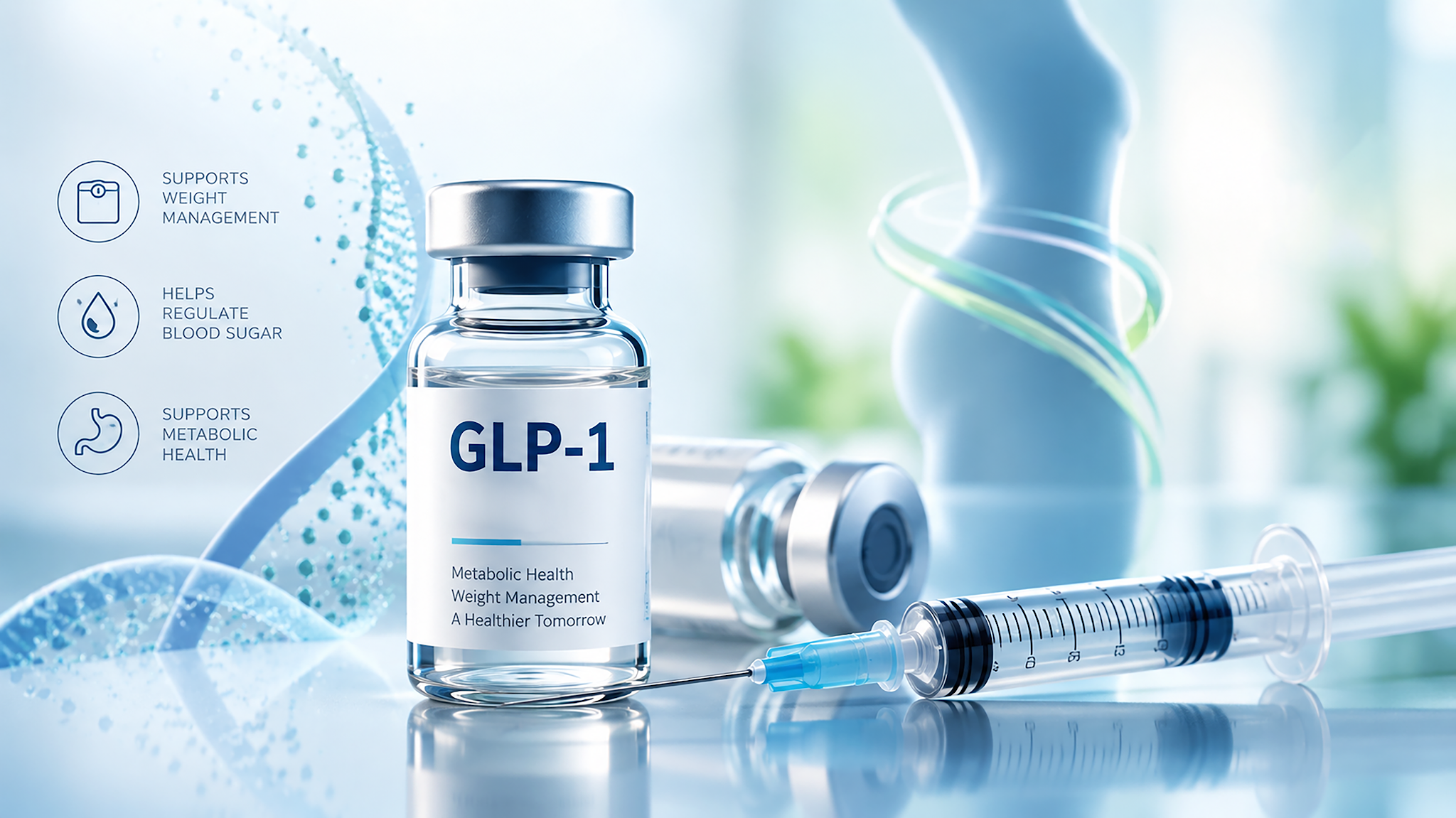
The result is a treatment journey that can involve more people, more questions, more interactions, and more information needs than traditional pharmaceutical engagement models were designed to handle.
In other words, a prescription does not necessarily mean a patient has successfully accessed or initiated therapy. Even after access, patients may face questions or challenges that affect continued treatment and persistence.
| 1. Awareness | 2. Consideration | 3. Access | 4. Treatment Initiation | 5. Ongoing Treatment & Persistence |
|---|---|---|---|---|
| DTC advertising Consumer research Disease / treatment education |
HCP discussion Treatment options Prescription |
Insurance verification Prior authorization Affordability Patient assistance Coverage navigation |
Treatment start Administration education Safety & tolerability questions Initial support |
Administration / usage questions Refill & treatment questions Ongoing education Adherence & persistence |
Each stage can generate questions. A patient may want to know where to find appropriate information about the medication. An HCP may need detailed medical information. A Medical Science Liaison (MSL) may need to engage in a scientific exchange. A Medical Information team may receive a question requiring a documented, evidence-based response.
Historically, these interactions have often been managed through separate channels and systems. The marketing organization may generate the demand. The HCP provides the prescription. Patient-support programs address access. Medical Affairs manages scientific exchange. Medical Information handles product questions.
But the patient experiences this as one journey. The technology supporting these interactions should therefore be designed to support a more connected model.
DTC Marketing Creates a New Role for Medical Information
DTC advertising is highly regulated, and pharmaceutical companies must provide appropriate risk and benefit information. FDA requirements apply to prescription drug advertising, including consumer-directed advertising, and FDA guidance specifically addresses how risk information should be communicated.
But the information contained in an advertisement is necessarily limited. Consumers may see an advertisement and then have questions that cannot or should not be answered by the promotional content itself.
That creates an important opportunity for Medical Information.
Instead of viewing Medical Information solely as a reactive call-center function, pharmaceutical companies can position it as a component of the broader customer-engagement ecosystem.
| DTC Campaign | Generate awareness and demand |
|---|---|
| Digital Engagement | Provide appropriate self-service information and education |
| HCP / MSL Interaction | Support clinical guidance and scientific exchange |
| Medical Information | Provide a compliant mechanism for responding to appropriate medical and scientific questions requiring additional information or human interaction |
SCIMAX MI: Connecting Questions to Medical Information
SciMax Global designed SCIMAX MI specifically for Medical Information and Communication, providing pharmaceutical organizations with a centralized platform for managing inquiries and delivering consistent, evidence-based responses.
For GLP-1 manufacturers, this becomes particularly relevant as inquiry volumes increase.
- HCP product-information inquiries
- Medical Information requests
- MSL-supported scientific exchange workflows
- Patient and caregiver questions where appropriate
- Response development and approval
- Standard and customized response packages
- Inquiry tracking and reporting metrics
- Integration with other third-party enterprise systems
- Agentic AI-enabled Medical Information workflows through SCIMAX ARIN
The objective is not simply to answer more questions. It is to help organizations answer the right questions, through the right channel, with the right information, while maintaining appropriate compliance and governance.
SCIMAX CP: Extending Engagement Beyond the Traditional Call Center
While SCIMAX MI provides the Medical Information foundation, SCIMAX CP- the SCIMAX Collaborative Portal extends the engagement model into a digital online environment. This can provide an additional channel through which patients, HCPs, MSLs, and other authorized stakeholders can interact with a pharmaceutical organization.
Instead of requiring every interaction to begin with a phone call or email, a digital portal can support appropriate self-service experiences while providing a path to escalation when a question requires additional assistance.
For GLP-1 therapies, this could be particularly valuable. A consumer responding to a DTC campaign may want additional information. An HCP may need product-specific medical information. A patient may need to locate appropriate educational resources. A question that cannot be addressed through self-service can potentially be routed into the appropriate Medical Information workflow.
Important distinction: This does not mean turning Medical Information into a promotional channel. Rather, it means creating better infrastructure for the appropriate separation and connection of promotional, educational, patient-support, and medical-information activities.
Moving from Customer Touchpoints to a Connected Journey
The GLP-1 market illustrates a broader transformation taking place across pharmaceutical customer engagement. Companies can no longer think about engagement solely in terms of individual channels.
A patient doesn’t think: “Now I am interacting with Marketing.”
Then: “Now I am interacting with Patient Services.”
And later: “Now I am interacting with Medical Information.”
They simply have a question or need.
The challenge for pharma is to provide an experience in which the appropriate organizational function can respond without forcing the customer to navigate the internal organizational structure.
This is where purpose-built applications such as SCIMAX MI, SCIMAX ARIN, and SCIMAX CP can play a significant role.
The Opportunity and Challenge for GLP-1 Manufacturers
The enormous commercial opportunity surrounding GLP-1 therapies is creating an equally significant operational challenge.
- Demand is growing.
- Patient questions are increasing.
- HCPs, patients, and MSLs need timely, reliable scientific information.
- Access, coverage, and affordability remain significant barriers.
- As these therapies reach an expanding patient population, pharmaceutical companies must be prepared to provide appropriate, accurate, and compliant information throughout the treatment journey.
The next generation of pharmaceutical engagement cannot be limited to creating more advertisements or adding more channels. It requires connecting those channels with the underlying processes that support them.
| SCIMAX CP | Digital engagement and self-service environment for patients, HCPs, MSLs, and other stakeholders. |
|---|---|
| SCIMAX MI | Purpose-built Medical Information infrastructure needed to manage inquiries, develop appropriate responses, and support compliant scientific communication. |
| SCIMAX ARIN | Purpose-built AI Agents designed to help optimize and accelerate these processes. |
Together, these capabilities can help pharmaceutical organizations move beyond a fragmented collection of customer touchpoints toward a more connected Medical Affairs and customer-engagement ecosystem.
Conclusion
The GLP-1 revolution has created unprecedented demand, but generating awareness is only half the battle. Patients and providers need seamless access to appropriate, timely, and compliant information throughout the treatment journey- yet most pharmaceutical organizations still operate through fragmented, disconnected channels.
The solution lies in connecting these experiences. SciMax Global’s purpose-built applications- SCIMAX MI for Medical Information infrastructure, SCIMAX CP for digital self-service engagement, and SCIMAX ARIN for AI-enabled workflows- help pharmaceutical organizations move beyond fragmented touchpoints toward a truly connected Medical Affairs ecosystem.
For GLP-1 manufacturers, this evolution is essential. The question is no longer “How do we generate demand?” It is: “Are we prepared to support everything that happens next?”
References
- American Medical Association. (2023, July 17). Questions patients may have about weight-loss drugs. https://www.ama-assn.org/public-health/behavioral-health/questions-patients-may-have-about-weight-loss-drugs
- KFF. (2025). 2025 Employer Health Benefits Survey. https://www.kff.org/health-costs/2025-employer-health-benefits-survey/
- KFF. (2026, January 15). Medicaid Coverage of and Spending on GLP-1s. https://www.kff.org/medicaid/medicaid-coverage-of-and-spending-on-glp-1s/
- U.S. Food and Drug Administration (FDA). (2023, December 26). Direct-to-Consumer Prescription Drug Advertisements: Presentation of the Major Statement. https://www.fda.gov/regulatory-information/search-fda-guidance-documents/direct-consumer-prescription-drug-advertisements-presentation-major-statement-clear-conspicuous-and
About the author

Jay Canter
Director of Business Development,
SciMax Global
Jay Canter brings deep expertise in life sciences, healthcare technology, and clinical research to his role in sales and business development at SciMax Global. He partners with Medical Affairs and Medical Information leadership to address complex business challenges through purpose-built technology solutions. His focus areas include eClinical technologies, Agentic AI, and digital transformation, supporting life sciences organizations in building more efficient, strategic, and connected operations.
